
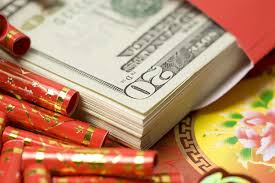
Red Packet Currency Conversion
Red packet currency conversion involves understanding the value of money given in gifts. It ensures the amount feels appropriate for the occasion and the recipient. This guide explains common practices and conversion tips for gifting and receiving red packets across different currencies and celebrations.
Understanding Red Packet Currency
Red packets are more than just envelopes with money. They hold deep cultural meaning. The color red itself symbolizes good luck and prosperity.
The money inside is a wish for good fortune. This is especially true for major events like weddings. The amount given is a significant gesture.
It shows respect and well wishes.
When celebrations happen, especially Chinese New Year, families and friends gather. It’s common to exchange red packets. For those living abroad or interacting with different cultures, currency can be a point of confusion.
You might receive a red packet with U.S. dollars when you’re used to Euros. Or you might want to give a red packet in your local currency but wonder if that’s okay.
The main idea is to give a gift of value. This value should feel meaningful to the person receiving it. It’s about the thought and the good wishes.
Currency conversion helps ensure this. It bridges the gap between different monetary systems. It makes the gift feel relevant and generous.
Why Currency Conversion Matters
Imagine giving a gift that feels too small. Or receiving one that seems oddly large because of currency rates. This can unintentionally create awkwardness.
Proper currency conversion helps avoid this. It allows you to set an appropriate amount. It ensures your gift aligns with cultural expectations.
For example, Chinese New Year is a time for giving. Families often give money to children. The amounts are usually modest but increase with the child’s age.
If you live in a country with a strong currency, like Switzerland, and you convert the gift into Swiss Francs, you need to know the equivalent value. A gift that seems small in Swiss Francs might be a significant amount in Yuan.
Similarly, at weddings, red packets are a major part of the gift. The amounts can be substantial. They contribute to the couple’s new life.
If you are giving a wedding red packet, knowing the local currency and its approximate value in a common reference currency (like USD or EUR) is helpful. This helps you decide a generous yet reasonable amount to put in the packet.
It’s also about showing respect for the tradition. While the spirit of the gift is paramount, understanding the monetary aspect shows you’ve put thought into it. You’re not just handing over any amount.
You’re considering its actual worth and its symbolic meaning within the culture.
The key takeaway is that context matters. What is considered a generous amount in one country might be different in another. Currency conversion is the tool that helps you understand this context.
It allows you to participate fully and appropriately in these joyful traditions.
Common Currency Scenarios for Red Packets
Scenario 1: Gifting in Your Local Currency.
You are in the U.S. and want to give a red packet for Chinese New Year. You’ll likely use U.S.
Dollars (USD). The important part is the amount you choose. Research typical gift amounts in USD for the occasion.
Scenario 2: Gifting in Chinese Yuan.
You are visiting China or have Chinese friends. You might want to give Yuan. You’ll need to know current exchange rates to decide how much to convert.
Scenario 3: Receiving a Red Packet in Foreign Currency.
You are in Canada and receive a red packet with Canadian Dollars (CAD) for a Lunar New Year celebration. You understand it’s a generous gift in CAD.
Scenario 4: Receiving a Red Packet with a Specific Value in Mind.
Sometimes, hosts might implicitly suggest a value. For example, at a wedding, the hosts might have a general idea of the ‘going rate’ in their local currency. You aim to match that or exceed it if you can.
Navigating Red Packet Amounts
When deciding how much money to put in a red packet, several factors come into play. These are cultural norms, your relationship with the recipient, and the specific occasion. Currency conversion is the bridge that connects these factors.
Let’s break down some common occasions.
Chinese New Year (Spring Festival)
This is perhaps the most well-known time for red packets. They are typically given by elders to younger, unmarried relatives. It’s also common for employers to give them to employees.
Key Considerations:
- Recipient’s Age: Younger children usually receive smaller amounts. As they get older, the amount can increase.
- Relationship: Closer family members might receive more than distant acquaintances.
- Generational Giving: Parents often give to their children. Grandparents give to their grandchildren.
- Odd vs. Even Numbers: In many Chinese cultures, even numbers are preferred for good luck. However, the number 8 is especially lucky as it sounds like ‘fortune’. The number 4 is avoided because it sounds like ‘death’.
Currency Conversion Tip: If you are in the U.S. giving to a Chinese-American family, you’ll use USD. A common starting point for young children might be $5 or $10 USD.
For older teens, it could be $20, $50, or even $100 USD, depending on the family and your relationship. If you are in China giving Yuan, amounts might range from 100-500 Yuan for children, and potentially more for close family or adults.
What feels like a lot of money can vary greatly. For instance, 100 Chinese Yuan is roughly $14 USD as of late 2023. So, $100 USD is a much larger gift than 100 Yuan.
Understanding this exchange helps you make a thoughtful choice.
Chinese New Year Red Packet Values (Approximate)
Style: Quick-scan table
| Recipient | Common Amount (USD) | Common Amount (CNY) | Notes |
|---|---|---|---|
| Young Child | $5 – $20 | 50 – 200 | Focus on the gesture. |
| Teenager | $20 – $50 | 200 – 500 | Slightly more as they grow. |
| Adult Relative / Friend | $50 – $100+ | 500 – 1000+ | Consider your closeness. |
| Employee | Varies widely | Varies widely | Often a bonus. |
Exchange rates fluctuate. These are general guides for context.
Weddings
Wedding gifts are typically more substantial. Red packets are a primary way to give monetary gifts. The amount given is often seen as a reflection of the guest’s financial ability and their relationship with the couple.
Key Considerations:
- Relationship to Couple: Close family and best friends usually give the most.
- Guest’s Financial Standing: It’s understood that gifts should be comfortable for the giver.
- Regional Customs: Different regions or communities might have slightly different expectations.
- Cost of the Wedding: Sometimes, guests might try to cover their ‘plate’ at the reception, though this is not always the primary driver.
Currency Conversion Tip: If attending a wedding in the U.S., amounts might start at $100 USD for acquaintances and go up to $200-$500 USD or more for close family. If attending a wedding in Hong Kong, you’d use Hong Kong Dollars (HKD). 1000 HKD is about $128 USD.
The perceived value needs to be considered. A gift that feels generous in local currency is the goal.
It’s very common for wedding guests to inquire subtly about appropriate amounts from others who are attending or from those who are familiar with the couple’s circle. This helps gauge expectations without having to ask directly.
Wedding Red Packet Values (Approximate)
Style: Stacked micro-sections
Close Family/Best Friends: In USD, this could range from $200-$500+. In other currencies, aim for an equivalent significant gesture. For example, 2000-5000 THB in Thailand (approx.
$55-$140 USD) might be typical depending on context.
Good Friends/Distant Relatives: $100-$200 USD is common. The aim is a solid, respectful gift.
Acquaintances/Colleagues: $50-$100 USD often suffices. This is a polite acknowledgement of the event.
Important Note: Always check local customs if possible. The value of money varies greatly.
Using Exchange Rates Wisely
When you need to convert currency for red packets, having a basic understanding of exchange rates is helpful. You don’t need to be a finance expert, but knowing the rough value can guide your decisions.
Let’s say you are in Australia (AUD) and want to give a red packet for a wedding in China. You decide you want to give a gift equivalent to about $150 USD. You would check the current AUD to USD exchange rate.
Then, you’d check the USD to CNY (Chinese Yuan) rate.
For example, if 1 USD is 0.75 AUD, then $150 USD is about 200 AUD. If 1 USD is 7.2 CNY, then $150 USD is about 1080 CNY. You would then convert your 200 AUD into CNY based on the current rate, or simply withdraw 200 AUD if the event is in Australia and that’s the expected way to gift.
Where to Find Exchange Rates:
- Online Currency Converters: Websites like Google, XE.com, or OANDA offer live exchange rates.
- Banking Apps: Most banking apps have a currency conversion tool.
- Financial News Sites: Major financial news outlets often display current exchange rates.
Experience Highlight: I remember attending a friend’s wedding in Vancouver, Canada. Most guests were giving gifts in Canadian Dollars (CAD). I had just returned from a trip to Europe and had some Euros (EUR) left.
I quickly checked my phone. At that time, 1 EUR was about 1.45 CAD. So, if I wanted to give the equivalent of $100 CAD, I would need about 69 EUR.
It was a simple check, but it made me feel confident about the value of the gift I was giving.
Important Caveat: Exchange rates change constantly. Use a rate from the day you are preparing the gift for the most accuracy. However, for red packets, slight variations are usually not a big deal.
The spirit of the gift is more important.
Understanding Local Customs Beyond Currency
While currency conversion is practical, don’t forget the cultural nuances. These are just as important, if not more so.
The Role of the Envelope
The red envelope itself is significant. It’s often plain red, sometimes with gold embossed designs. You can buy them at Asian supermarkets or online.
Using a proper red packet shows you understand the tradition.
Symbolic Numbers
We mentioned avoiding the number 4. This is a significant superstition. Always check if there are other numbers that are considered unlucky in the specific culture you are engaging with.
For instance, in some contexts, numbers that sound similar to negative words might be avoided. The number 8 is universally good. Numbers like 6 and 9 are also often seen positively, sounding like ‘smooth’ and ‘long-lasting’ respectively.
The Act of Giving
How you give the red packet also matters. It’s often handed over with two hands. This shows respect.
When receiving, it’s also polite to accept with two hands.
For Chinese New Year, it’s common for married couples to give red packets to unmarried juniors. The expectation is that the juniors will eventually ‘grow up’ and do the same. It’s a beautiful cycle of passing good fortune.
Red Packet Etiquette Quick Guide
Style: Observational flow
Preparation: Buy authentic red envelopes. Know the approximate local currency value you want to gift.
During Giving: Use two hands. Offer a smile and good wishes.
During Receiving: Accept with two hands. Express thanks.
For Chinese New Year: Elders give to younger, unmarried individuals. Newly married couples may also give to their parents or elders.
For Weddings: Gifts are given to the couple to help them start their new life. The amount is usually more substantial.
What This Means for You: Practical Steps
So, how do you put all this into practice? Here’s a simple breakdown.
When You Plan to Give a Red Packet
- Identify the Occasion: Is it Chinese New Year, a wedding, a birthday, or another celebration?
- Know the Recipient: Who are you giving it to? What is your relationship?
- Research Local Norms: If the event is in a different country, try to find out typical gift amounts in that local currency.
- Use a Currency Converter: If you are gifting in your home currency but need to know the equivalent in the recipient’s currency, use an online tool. For example, if you want to give what feels like $50 USD but are in Europe, check the Euro equivalent.
- Consider the Exchange Rate: Aim for an amount that feels generous in the recipient’s context. Don’t stress over exact cents. A rounded, respectful amount is perfect.
- Buy Red Envelopes: Get the right kind of envelope for the occasion.
- Add Your Well Wishes: Often, a small written message or just a heartfelt verbal wish enhances the gift.
When You Receive a Red Packet
Receiving is a Joy!
- Express Gratitude: Always thank the giver sincerely. Using two hands is a polite gesture.
- Understand the Value: If you receive a foreign currency, you can use a converter later to see its approximate value in your own currency. This helps you appreciate the generosity.
- Context is Key: Remember that the giver intended a specific level of generosity within their own context and culture.
- It’s Not Just About the Money: The real gift is the good wishes and the connection.
My own experience with receiving: A few years ago, I received a red packet from a colleague who was celebrating her daughter’s engagement. It was given to me in U.S. Dollars.
I knew she was from a background where these gifts were common. When I later looked at the amount, it was a very generous sum in USD. It wasn’t just the money; it was the acknowledgment and the warmth of the gesture, especially since I wasn’t directly related to her family.
It showed she valued our professional relationship and wanted to include me in her family’s joy.
Red Packet Currency Conversion Checklist
Style: Card grid
1. Occasion & Recipient
Know why and for whom you’re gifting.
2. Local Norms
Research typical gift amounts in the area.
3. Currency Converter
Use online tools for quick rate checks.
4. Value Perception
Ensure the amount feels significant locally.
5. The Envelope
Use authentic red packets.
6. Good Wishes
Add your heartfelt blessings.
Common Questions About Red Packet Currency
When is it okay to give a red packet in my own country’s currency?
Click to expand
It is perfectly fine to give a red packet in your own country’s currency, especially if the celebration is happening in your country or you are gifting to someone who lives there. The key is to ensure the amount you give feels appropriate and generous within your local context. For example, if you are in the U.S., using U.S.
Dollars is standard. The important part is the value of the gift.
Do I need to convert the exact amount of money?
Click to expand
No, you do not need to convert the exact amount down to the last cent. Cultural gift-giving is more about the gesture and the thoughtfulness. Aim for a rounded, convenient amount that feels generous.
For instance, if a quick conversion suggests $48.75, giving $50 is perfectly acceptable and often preferred.
What if I receive a red packet in a currency I don’t know the value of?
Click to expand
If you receive a red packet in a foreign currency, you can always use a smartphone app or an online converter later to check its approximate value. This helps you appreciate the gift’s worth. However, it’s polite to express thanks immediately without knowing the exact value.
Are there specific lucky or unlucky numbers in currency amounts?
Click to expand
Yes, particularly in Chinese culture. The number 8 is considered very lucky and often sounds like ‘fortune.’ Numbers that sound like ‘death’ (like 4) are usually avoided. So, amounts like $88, $168, or $888 are often preferred.
Amounts ending in 4, like $40 or $44, are generally avoided.
How much is considered a “generous” amount in a red packet?
Click to expand
This varies greatly by occasion, relationship, and location. For Chinese New Year, a child might receive $10-$50 USD equivalent. For a wedding, a close friend or family member might give $100-$500 USD equivalent or more.
The best approach is to research local customs or ask discreetly if you are unsure.
Should I give a red packet if I’m not Asian?
Click to expand
Absolutely! Red packets are a beautiful tradition that many people of all backgrounds embrace when participating in or celebrating with friends and family from cultures that practice it. Showing respect and participating thoughtfully is always welcome.
The gesture of good wishes is universal.
Conclusion
Red packet currency conversion might seem like a detail, but it helps you participate fully. It ensures your gift is both thoughtful and culturally appropriate. Whether you’re giving or receiving, understanding the value and context makes the tradition richer.
The most important thing is the good wishes you share. Enjoy the celebrations!

Leave a Reply