
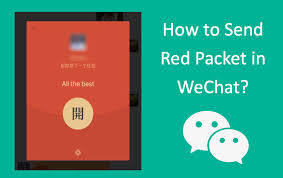
Send Red Packet To China From Usa
Sending money to loved ones overseas feels great. It’s a way to share joy, offer support, or just send a gift. When you want to send a red packet, or hongbao, to someone in China from the United States, it can feel a bit complicated.
You want it to arrive safely and quickly. You also want to understand all the steps involved. Let’s break down how you can do this easily.
Sending a red packet to China from the USA means using digital money transfer services. You’ll choose a service, enter the amount and recipient’s details, and pay using your U.S. bank account or card.
The money then moves through the system to your recipient in China, often to their mobile payment app.
Understanding Red Packets in a Digital World
Red packets, or hongbao, are a big part of Chinese culture. They are traditionally given during special occasions. Think Chinese New Year, weddings, or birthdays.
They symbolize good luck and blessings. In the past, these were physical red envelopes filled with cash. Now, with technology, sending digital red packets is super common.
These digital versions are often sent through popular apps. People can send them to friends or family. Sometimes, they are sent in group chats.
This makes sharing festive cheer fun and easy, even when you are far apart. It’s a modern twist on an old tradition.
For those of us in the U.S. wanting to send one to China, the process mirrors sending money online. But there are specific platforms designed for this.
They help bridge the distance. The goal is to make the transfer feel personal, like a real red packet. It should carry the same warm wishes.
How to Send a Red Packet to China from the USA
There are several ways to send money to China from the U.S. Some are better suited for sending a red packet than others. The best option often depends on how fast you need the money to arrive.
It also depends on the fees and how easy it is to use.
Many people use international money transfer services. These are companies that specialize in sending money across borders. They have apps or websites that make the process simple.
You tell them how much you want to send and where it needs to go. Then, you pay them in U.S. dollars.
The service then converts your money. They send it in Chinese Yuan (CNY) to the recipient. Most services aim for quick delivery.
Some can even get the money there within minutes or a few hours. This is important for time-sensitive gifts and celebrations.
You’ll need some information from the person you’re sending to. Usually, this includes their bank account details. Sometimes, it’s their mobile number linked to a payment app like Alipay or WeChat Pay.
These apps are how most people in China receive money digitally.
Popular Services for Sending Red Packets
When you’re looking for a service, think about what’s most important. Is it speed? Is it cost?
Or is it ease of use? Here are some popular choices many people use:
1. Wise (formerly TransferWise): Wise is well-known for low fees. They offer competitive exchange rates.
You can send money directly to a Chinese bank account. They are very transparent about their costs. This makes budgeting easy.
2. PayPal/Xoom: PayPal itself isn’t always the best for direct China transfers. But its service Xoom is.
Xoom allows you to send money online. You can send it for bank deposit or cash pickup. For China, bank deposit is usually the way to go.
3. Remitly: Remitly is another popular choice. It’s known for being user-friendly.
They offer different speed options. Some transfers are faster but might cost a bit more. Others are slower but cheaper.
4. WorldRemit: WorldRemit also provides money transfer services. You can send money for bank deposits.
They often have good deals for new users. It’s worth checking their current offers.
5. Western Union / MoneyGram: These are older, more traditional services. They have many physical locations.
You can send money online too. Sometimes, their fees can be higher. But they can be a good option if the recipient prefers cash pickup or doesn’t have a bank account.
It’s a good idea to compare a few of these. Check the total amount the recipient will get. Compare this with the amount you send.
Also, look at how long it takes.
The Process: Step-by-Step
Sending a digital red packet is straightforward. Here’s a general idea of what you’ll do:
Step 1: Choose Your Service
Pick one of the services mentioned above. Or find another one you trust. Download their app or visit their website.
Step 2: Create an Account
You’ll need to sign up. This usually involves providing your email, phone number, and address. You will also need to verify your identity.
This is a standard security step.
Step 3: Enter Recipient Details
This is a crucial part. You will need the full name of the person in China. You’ll also need their bank account number.
Some services might ask for their mobile number. Make sure this number is linked to Alipay or WeChat Pay. Double-check all details to avoid errors.
Step 4: Enter Transfer Amount
Decide how much money you want to send. Enter this amount in U.S. dollars.
The service will show you the exchange rate. It will also show you the fees. You will then see the total amount your recipient will receive in CNY.
Step 5: Fund Your Transfer
You can usually pay using a U.S. bank account (ACH transfer). You can also use a debit card.
Some services accept credit cards, but this might have higher fees.
Step 6: Confirm and Send
Review all the details one last time. Make sure everything is correct. Then, confirm the transfer.
You’ll usually get a confirmation email or notification.
Step 7: Track Your Transfer
Most services let you track your money transfer online. You can see when it’s being processed and when it’s delivered. This gives you peace of mind.
Key Information Needed for Recipient
- Full Name: Exactly as it appears on their ID or bank account.
- Bank Name: The specific bank in China.
- Bank Account Number: The correct digits for their account.
- Mobile Number (Optional but Recommended): Often linked to Alipay or WeChat Pay for faster delivery.
- SWIFT/BIC Code (Sometimes Needed): For international bank transfers, though many services handle this internally.
Understanding Fees and Exchange Rates
This is where many people get confused. When sending money internationally, you’ll always encounter fees and exchange rates. These affect the final amount the recipient gets.
Transfer Fees
Each service charges a fee for their service. This can be a flat fee. It can also be a percentage of the amount you send.
Some services offer lower fees for slower transfers. Others have promotional offers for new users.
Exchange Rates
This is the rate at which your U.S. dollars are converted to Chinese Yuan. Services make money on the exchange rate.
They often mark it up slightly from the mid-market rate. The mid-market rate is what you see on Google or financial news sites.
Always compare the total cost. This means the fee PLUS the exchange rate difference. A service with a lower fee might have a worse exchange rate.
This can end up costing you more overall. Look at the final amount received. That is the most important number.
For example, if you send $100 USD:
Service A: $5 fee, exchange rate 1 USD = 6.8 CNY. Recipient gets 95 * 6.8 = 646 CNY.
Service B: $2 fee, exchange rate 1 USD = 6.7 CNY. Recipient gets 98 * 6.7 = 656.6 CNY.
In this case, Service B gives the recipient more money. Even though its fee is lower, the better exchange rate makes a big difference.
Quick Comparison of Transfer Costs
What to look for:
- Upfront Fees: Clearly stated charges.
- Exchange Rate Markup: How far it is from the mid-market rate.
- Total Cost: The combined effect of fees and rate.
- Recipient Amount: The final figure in Chinese Yuan.
Delivery Times: How Fast Can It Arrive?
When sending a red packet, timing can be important. You want it to arrive for the celebration! Most modern services are quite fast.
Instant or Near-Instant: Some transfers can arrive in minutes. This is often the case when sending to mobile wallets like Alipay or WeChat Pay. This is usually the best option for last-minute gifts.
Within a Few Hours: Other transfers might take 2-4 hours. This is still very quick and good for most situations.
1-2 Business Days: Bank transfers can sometimes take a bit longer. If you are sending directly to a Chinese bank account, it might take up to two business days. Weekends and public holidays can add delays.
Always check the estimated delivery time when you set up the transfer. This helps manage expectations.
Delivery Speed Factors
Recipient’s Account Type: Mobile wallets are often fastest.
Time of Day/Week: Weekends and holidays can slow things down.
Amount Transferred: Very large amounts might require extra checks.
Service Chosen: Different providers have different speeds.
Digital Red Packets and WeChat/Alipay
In China, WeChat Pay and Alipay are dominant. They are used for almost everything. This includes paying bills, shopping, and sending money.
Most international money transfer services now link to these platforms. When you send money, you can often specify that it goes directly to a WeChat or Alipay account. This makes it very convenient for the recipient.
If your recipient has a WeChat or Alipay account, this is usually the easiest way to send a red packet. The money arrives as a digital balance. They can then use it as they wish.
It feels very much like receiving a digital gift.
Important Note: Ensure the recipient’s WeChat or Alipay account is verified. They may need to link it to their Chinese bank account. This is especially true for receiving larger sums or international transfers.
Sometimes, there are limits on what unverified accounts can receive.
My Own Red Packet Adventure
I remember vividly the first time I tried to send a red packet to my niece in Shanghai for her birthday. It was a few years ago, and I was so excited to participate in this tradition. I’d heard about digital red packets and thought it would be easy.
I picked a service I’d used before for sending money to Europe. I went through the steps, entered her name and her parents’ bank details. I clicked send, feeling very pleased with myself.
The confirmation said it would take 1-2 days.
Her birthday came and went. No red packet arrived. I got a bit worried.
I contacted the service. They said there was an issue with the bank details. I had to get the correct ones from her parents.
This took another day of back and forth.
Then, the transfer had to be re-processed. It finally arrived almost three days after her birthday. She was so sweet about it, saying “Thank you, Auntie!” but I felt terrible.
It wasn’t the surprise or the joy I wanted to give.
That experience taught me a lot. First, I learned how crucial accuracy is. Every single digit in the bank account number matters.
Second, I realized that using services specifically designed for China is better. They understand the local payment systems like WeChat Pay. Now, I always use services that can send directly to mobile wallets.
It’s so much faster and usually avoids those frustrating bank-related hiccups.
Lessons Learned from Experience
- Accuracy is Paramount: Double-check all recipient information.
- Use China-Specific Services: They often integrate better with local payment apps.
- Opt for Mobile Wallets: WeChat Pay and Alipay are usually the fastest and easiest.
- Factor in Time Zones and Holidays: Plan ahead to avoid delays.
Real-World Contexts and When to Send
Sending a red packet isn’t just for one occasion. While Chinese New Year is the most famous, there are many times it’s appropriate.
Chinese New Year
This is the biggest one. Families give red packets to children and younger relatives. It’s a symbol of good luck and prosperity for the coming year.
Birthdays
Especially for children and elders, a birthday red packet is a lovely gesture. It shows you are thinking of them and wishing them well.
Weddings
Red packets are a common wedding gift. They are given by guests to the couple. They help the newlyweds start their new life together.
Graduations
Celebrating a student’s achievement is another great time. A red packet can be a way to congratulate them.
New Baby
Welcoming a new child into the family is a joyous event. Red packets are often given to the parents to help with the baby’s expenses.
Consider the recipient’s age and your relationship. In China, it’s common for older generations to give to younger ones. However, in families with close bonds, younger people might also send gifts to elders, especially if they can’t be there in person.
What This Means for You: When It’s Normal vs. When to Worry
Most of the time, sending a digital red packet is straightforward and safe. But it’s good to know what to expect.
When It’s Normal
- Clear Delivery Estimates: The service gives you a time frame.
- Transparent Fees: You see all costs before you send.
- Recipient Receives Funds: The money shows up in their account.
- Confirmation Message: You get a notification that the transfer is complete.
When to Worry
- Unclear Fees or Exchange Rates: If the costs seem hidden or confusing.
- No Delivery Confirmation: If the money doesn’t arrive and there’s no update.
- Requests for Excessive Personal Info: Beyond standard verification.
- Unsolicited “Too Good to Be True” Offers: Be wary of scams.
- Poor Customer Support: If you can’t get help when you need it.
Trustworthy services will be upfront about everything. They have customer support to help if something goes wrong. If a service feels shady or asks for weird information, it’s best to avoid it.
Also, be aware of any regulations. In the U.S., there are limits on how much you can send without extra reporting. For personal transfers, these limits are usually quite high.
However, for very large sums, you might need to provide more documentation. This is standard practice for anti-money laundering rules.
For sending a typical red packet, especially for occasions like Chinese New Year or birthdays, the amounts are usually well within easy limits. You won’t need to worry about complex regulations.
Quick Tips for Sending a Smooth Red Packet
Here are some practical tips to make sure your red packet arrives without a hitch:
- Start Early: Don’t wait until the last minute. Plan ahead, especially for major holidays.
- Verify Recipient Details Twice: A wrong number or name can cause major delays.
- Use Mobile Wallets When Possible: WeChat Pay and Alipay are very efficient for recipients in China.
- Compare Services Before Sending: Even small differences in fees or rates add up.
- Understand the Total Cost: Fees plus exchange rate impact.
- Keep Track of Your Transfer: Use the tracking number provided.
- Save the Confirmation: For your records.
- Consider the Time Zone: When sending, think about when the recipient will receive it.
- Be Patient with Bank Transfers: They can take a little longer than mobile payments.
Sending Smart: A Checklist
Before you send:
- Have recipient’s correct full name and bank details/mobile number.
- Know the exact CNY amount you want them to receive.
- Compare 2-3 transfer services for best rates and fees.
- Check estimated delivery time.
After you send:
- Track the transfer status.
- Confirm receipt with the sender (if possible and appropriate).
Frequently Asked Questions About Sending Red Packets
Can I send a red packet from the USA to China using Zelle or Venmo?
No, Zelle and Venmo are designed for domestic transfers within the United States. They do not support international money transfers to China.
How much does it cost to send a red packet to China from the USA?
Costs vary by service. You’ll pay transfer fees and a markup on the exchange rate. Some services offer lower fees for slower transfers or have promotional rates for new users.
Always compare the total cost.
What is the fastest way to send a red packet to China?
The fastest way is usually by sending money directly to the recipient’s mobile payment app like WeChat Pay or Alipay. Many transfer services offer this option, and it can be nearly instant.
Do I need a Chinese bank account to send money there?
No, you do not need a Chinese bank account to send money to China from the USA. You will use your U.S. bank account or debit card to fund the transfer.
The recipient in China will need a way to receive the funds, typically a Chinese bank account or a mobile payment app.
What happens if I enter the wrong bank account details?
If you enter incorrect bank account details, the transfer may be delayed, rejected, or sent to the wrong person. Most services have a process to correct errors, but it can take time. It’s very important to double-check all information before sending.
Can I send a red packet to someone who doesn’t have Alipay or WeChat Pay?
Yes, many services allow you to send money directly to a Chinese bank account. However, if your recipient is accustomed to using mobile payments, having them set up Alipay or WeChat Pay is usually the most convenient and fastest option.
Conclusion
Sending a digital red packet to China from the USA is easier than ever. By using a reliable international money transfer service, you can share tradition and joy with loved ones. Remember to compare services, check all details carefully, and plan a little ahead.
Your thoughtful gift will surely be appreciated.

Leave a Reply