
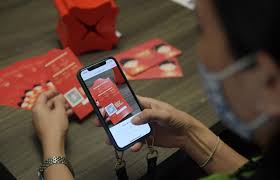
How To Send Hongbao From Overseas
You can send Hongbao from overseas by using international money transfer services, specific apps that support cross-border payments, or by leveraging digital payment platforms that have international capabilities. The easiest methods often involve using services familiar to the recipient, like WeChat Pay or Alipay, if they can link international cards. Sometimes, using a trusted third-party service that converts currency and sends it to a local Chinese bank account is also an option.
Understanding the Hongbao Tradition
The Hongbao is more than just money in a red envelope. It’s a gift of well wishes. The color red itself is lucky.
It’s thought to ward off evil spirits. Giving a Hongbao is a way to share good fortune. This is especially true for younger generations or those starting new ventures.
Historically, Hongbao were given on special occasions. Chinese New Year is the most popular time. But they are also given for weddings, birthdays, and the birth of a child.
The amount of money inside can vary. It often includes lucky numbers. For example, numbers like 8 are good luck.
Numbers like 4 are often avoided.
In today’s digital age, the tradition has evolved. Many people now send digital Hongbao. This is done through smartphone apps.
It’s quick and easy. But sending these digital gifts across borders presents unique challenges. That’s where understanding the options comes in handy.
My First Hongbao Sending Scare
I remember one Chinese New Year a few years back. I was living in the U.S. My niece was turning one.
She was born in China. My sister asked if I could send a small Hongbao for her birthday. My heart sank a little.
I had never sent money internationally before. My mind raced with worries about fees, exchange rates, and if the money would even arrive on time. I pictured my sister waiting, and the special occasion passing without my small gift.
It felt like a huge barrier. I spent hours online, feeling a bit overwhelmed by all the different transfer services. I finally settled on one that seemed okay.
But the anxiety lingered until I got a text confirming the money arrived, days later than I’d hoped.
Digital Hongbao and International Hurdles
The most common way to send Hongbao in China is through apps like WeChat (Weixin) and Alipay. These platforms are deeply integrated into daily life there. They handle everything from payments to social networking.
If you are in China, sending a digital Hongbao is simple. You open the app, find your contact, tap the ‘Red Packet’ option, enter the amount, and send. It’s usually instant.
The problem arises when you are outside of China. These apps primarily work with Chinese bank accounts and cards. Receiving payments from overseas can be difficult.
Many international credit or debit cards are not directly supported for sending funds within these Chinese apps. This is the main hurdle for sending a Hongbao from overseas.
Even if you can find a way to send, currency conversion is another factor. Exchange rates can eat into the amount. Fees from banks or transfer services add up too.
You want the recipient to get a good amount. You also want it to be easy for them to access.
Understanding Digital Payment Ecosystems
Chinese Apps: WeChat Pay and Alipay are dominant. They link directly to Chinese bank accounts. This makes sending and receiving seamless for users within China.
International Links: Many international cards can be linked to these apps for spending. However, using them to send funds into a Hongbao can be restricted or have limits.
Recipient’s Account: The biggest factor is how the recipient’s account is set up. Do they have a Chinese bank account linked? Can they accept international transfers easily?
Option 1: International Money Transfer Services
These are probably the most traditional way to send money abroad. Services like PayPal, Wise (formerly TransferWise), Xoom (a PayPal service), or Western Union have been around for a while. They are designed for sending money between countries.
How it works: You create an account with the service. You link your bank account or card. You tell them how much you want to send and to whom.
You can usually send it to a bank account or for cash pickup.
Pros:
- Widely available and recognized services.
- Often allow sending to a bank account directly.
- Clear fee structures (though they can add up).
Cons:
- Exchange rates might not always be the best.
- Fees can be high, especially for smaller amounts.
- Delivery time can vary. It might not be instant.
- The recipient might need to have a bank account that accepts international transfers.
If you’re sending to a family member with a stable bank account, this can be a reliable choice. Just compare fees and rates carefully. Check how long it will take to arrive.
You don’t want the Hongbao to miss the occasion!
Option 2: Using WeChat Pay or Alipay Directly (with Caveats)
This is the ideal scenario if it works. Many people in China use WeChat and Alipay for everything. If your recipient is set up to receive funds via these apps, it feels very natural.
The Challenge: As mentioned, using a foreign credit card to send money within these apps can be tricky. Often, you can link your foreign card to the app for spending. But topping up your balance or directly sending a Hongbao to someone might have limits or restrictions.
Regulations change, too.
What to try:
- Link Your Card: First, try linking your U.S. (or other country’s) Visa or Mastercard to your WeChat or Alipay account. Follow the app’s instructions carefully. You might need to go through verification steps.
- Test a Small Amount: If you can link your card, try sending a very small amount first. See if the Hongbao function works with your linked card.
- Check Recipient’s Setup: Ensure your recipient has a Chinese bank account linked to their WeChat or Alipay. This is crucial for them to receive funds easily.
My Experience with Linking Cards: I managed to link my U.S. Visa to Alipay once. It allowed me to pay for things directly in some stores in China.
But when I tried to send a Hongbao, it said my card could not be used for this specific transaction. It was frustrating! This is why it’s not always a guaranteed method for sending a Hongbao from overseas.
Quick Scan: Digital Wallet Options
| App | Best For | International Sending Hurdle | International Card Link |
|---|---|---|---|
| WeChat Pay | Social payments, everyday spending in China | Difficult to use foreign cards for sending money | Possible for spending, sending is hit or miss |
| Alipay | Broader services, e-commerce, payments | Similar to WeChat, sending money can be restricted | Possible for spending, sending is hit or miss |
Option 3: Third-Party Remittance Apps
There are newer services focused on making international transfers easier and cheaper. Some specifically cater to sending money to China. These apps often partner with local payment systems.
Examples might include services like Remitly, WorldRemit, or specific China-focused remittance platforms. You’ll need to research which ones are currently active and reputable.
How it works: Similar to Option 1, you sign up, link your payment method, and specify the recipient. The key difference is that these services may have more streamlined processes for China. They might offer delivery directly to Alipay or WeChat if they have agreements.
Pros:
- Potentially better exchange rates and lower fees than traditional banks.
- Faster transfer times possible.
- May offer direct deposit to popular Chinese apps.
Cons:
- Availability varies by country.
- Need to ensure the service is trustworthy and secure.
- Fees and rates can still differ, so compare.
When looking into these, search for services that explicitly mention sending money to China or supporting Alipay/WeChat transfers. This is often the most practical way to send a Hongbao from overseas if direct app methods fail.
Option 4: Using a Friend or Family Member as an Intermediary
This method relies on trust and convenience. If you have a close friend or family member in China who you know will be sending money or gifts anyway, you can work with them.
How it works: You send money to your intermediary using a method that works for both of you (e.g., a standard international bank transfer, PayPal, or Wise). Your intermediary then uses their local Chinese app (WeChat or Alipay) to send the Hongbao to your intended recipient. They can add your message or well wishes.
Pros:
- Often the simplest way if you have a trusted intermediary.
- Leverages local payment systems directly.
- Avoids complex international transaction issues for the recipient.
Cons:
- Requires a very trustworthy person.
- You might incur fees twice (once to the intermediary, then their transfer).
- The intermediary might not send it immediately, or might forget.
This is a good option for smaller amounts or when convenience is key. It works best if you and your intermediary are in the same time zone or have easy communication.
Intermediary Method: What to Consider
Trust Level: Can you fully trust this person with your money? Are they organized?
Communication: How easy is it to communicate with them? Do they understand your wishes clearly?
Fees: Discuss if they expect you to cover their local transfer fees. Usually, they do it as a favor.
Timing: Make sure they understand the importance of sending it around the specific date or event.
Option 5: Cryptocurrency (Use with Extreme Caution)
This is a more advanced and often less practical method for traditional Hongbao. However, some people are exploring it.
How it works: You would buy cryptocurrency (like Bitcoin or stablecoins). You send it to the recipient’s crypto wallet. They then convert it back to local currency.
Pros:
- Can sometimes bypass traditional banking systems.
- Transaction fees can be low depending on the network.
Cons:
- Volatility: Most cryptocurrencies are highly volatile. The value can drop significantly between sending and receiving.
- Complexity: Both sender and receiver need to understand crypto wallets, transactions, and exchanges.
- Regulations: China has strict regulations regarding cryptocurrency. It might be difficult or illegal for the recipient to convert it to cash.
- Not Traditional: This completely moves away from the cultural aspect of Hongbao.
For sending a traditional Hongbao from overseas, I would strongly advise against this method unless you and the recipient are both very experienced with cryptocurrency and understand all the risks involved. It’s generally not recommended for this purpose.
Choosing the Right Method for You
When deciding how to send a Hongbao from overseas, think about these key factors:
Decision Tree: Your Hongbao Path
1. Does your recipient have a Chinese bank account linked to WeChat/Alipay?
* Yes: Try linking your foreign card to their app first (Option 2). If that fails, explore third-party apps that support direct transfers to WeChat/Alipay (Option 3).
* No / Unsure: Use a traditional international money transfer service (Option 1) or a trusted intermediary (Option 4).
2. How fast do you need it to arrive?
* Instant/Same Day: Digital apps (if they work) or well-known, fast transfer services. An intermediary might also be fast if they send it right away.
* A Few Days is Okay: Most international money transfer services will work. Give yourself ample buffer time.
3. What is your budget for fees and exchange rates?
* Minimize Costs: Compare rates and fees across multiple services. Third-party apps (Option 3) or Wise (Option 1) are often good for this.
* Convenience Over Cost: If ease is more important, a well-known service or a trusted intermediary might be worth a small extra fee.
Real-World Scenarios
Let’s look at a few common situations:
Scenario 1: Sending to a Young Child in China
Your grandchild is celebrating their first birthday in Shanghai. They don’t have their own bank account yet. Your daughter (their mother) uses WeChat Pay extensively.
Your best bet is to try linking your U.S. Visa to your Alipay account and see if you can send to your daughter’s WeChat. If that’s not possible, use a service like Wise to send USD to your daughter’s UnionPay card, which can then be linked to her WeChat/Alipay.
Or, ask your daughter if she has a preferred remittance service she can receive funds through.
Scenario 2: Sending to an Elder Relative in a Smaller Town
Your aunt lives in a smaller city in China. She’s not very tech-savvy. She prefers to receive cash or have money directly in her bank account.
Using a service like Xoom or Western Union to send USD directly to her bank account would be ideal. Ensure the bank she uses is well-equipped to handle international transfers. If cash pickup is an option and she’s comfortable with it, that’s also viable.
Scenario 3: Sending to a University Student in Beijing
Your cousin is studying in Beijing and uses Alipay for everything, from food to transport. She has a Chinese bank account linked to her Alipay. You try linking your Canadian Mastercard to your Alipay.
If it works, you send a digital Hongbao. If not, you could use a service like Remitly, which claims fast transfers to Alipay. Make sure the service allows you to specify Alipay as the destination.
Sending Hongbao: What Recipients Need
Chinese Bank Account: This is almost always necessary for seamless receiving, especially with WeChat/Alipay.
Linked Digital Wallet: If you use a service that deposits directly into WeChat Pay or Alipay, ensure their account is properly set up.
Access to Funds: Can they easily withdraw the money once it arrives? Some services might have limits or require specific steps.
Comfort with Method: Will they understand how to receive it? Simple methods are best for less tech-savvy individuals.
What This Means for You
Sending a Hongbao from overseas requires a little planning. It’s not as simple as sending money to someone in your own country. You need to be aware of the systems involved.
When it’s normal: It’s normal to find that direct methods within WeChat or Alipay don’t work with your foreign card. It’s also normal for fees and exchange rates to vary significantly between services. Expect to do a little research.
When to worry: You should worry if a service seems too good to be true (extremely low fees, unbelievable exchange rates). Be cautious of unofficial channels or individuals asking for your banking passwords. Never share sensitive banking details on untrusted websites or through insecure channels.
Simple checks:
- Check the recipient’s preferred method. Ask them if they can receive funds via a specific app or bank.
- Compare exchange rates and fees. Use online comparison tools for international money transfers.
- Read reviews. See what other users say about the speed and reliability of a service.
The goal is to send your well wishes reliably. It takes a bit of effort, but it’s definitely achievable.
Quick Tips for Smooth Sending
Here are some actionable tips to make sending your Hongbao smoother:
- Plan Ahead: Don’t wait until the last minute. International transfers can take time.
- Communicate with Recipient: Ask them what works best for them. Do they prefer WeChat, Alipay, or a bank deposit?
- Use Reputable Services: Stick to well-known international money transfer companies or apps.
- Check Fees and Rates Carefully: Look at the total cost, including transfer fees and the exchange rate.
- Consider the Recipient’s Tech Savvy: Choose a method they can easily understand and use.
- Save Transaction Details: Keep records of your transfers in case of any issues.
- Be Patient: Sometimes, especially around busy holidays, transfers can take a little longer.
Sending a Hongbao is a wonderful way to show you care. Even from afar, your gesture will be appreciated. It bridges the distance and keeps traditions alive.
Frequently Asked Questions
Can I send a Hongbao directly through the WeChat app from outside of China?
It can be difficult. While you can link foreign credit cards to WeChat for spending, using them to send money or Hongbao within the app often has restrictions or may not be supported. It’s best to check the app’s current policies or use alternative methods.
What is the best exchange rate for sending money to China?
Exchange rates vary daily and between different services. Apps like Wise (formerly TransferWise) often offer very competitive, mid-market rates with transparent fees. Comparing rates on a few different services right before you send is the best approach.
How long does it take to send a Hongbao from the U.S. to China?
This depends heavily on the method. Digital transfers via specific remittance apps can sometimes arrive within minutes or hours. Traditional bank transfers or some money transfer services might take 1-3 business days.
Planning ahead is crucial.
Can I send a Hongbao to an Alipay account from overseas?
Similar to WeChat, directly sending money from a foreign card to an Alipay Hongbao can be restricted. However, some third-party remittance services specialize in sending funds directly to Alipay accounts. Research these services for the most reliable option.
Are there any fees for sending a Hongbao internationally?
Yes, almost all methods involve fees. These can include transfer fees charged by the service, and currency exchange margins. Some services offer the first transfer fee-free to attract new users.
What is the safest way to send money for a Hongbao from overseas?
The safest ways involve using well-established international money transfer services (like Wise, Xoom, Remitly) or reputable remittance apps that clearly show their fees and exchange rates. Always ensure the service is legitimate and has good customer reviews.
Connecting Across Continents
Sending a Hongbao from overseas is a modern way to honor an ancient tradition. While the digital landscape can be complex, solutions exist. Whether you use a trusted transfer service, a specific remittance app, or even a helpful intermediary, your gesture of sending good wishes will be felt.
Remember to plan ahead, compare your options, and always prioritize secure and reputable methods. Your loved ones will appreciate the effort you make to stay connected, no matter the miles between you. It’s a beautiful way to share joy and prosperity.
Leave a Reply